Berlin Germany Travel Guide
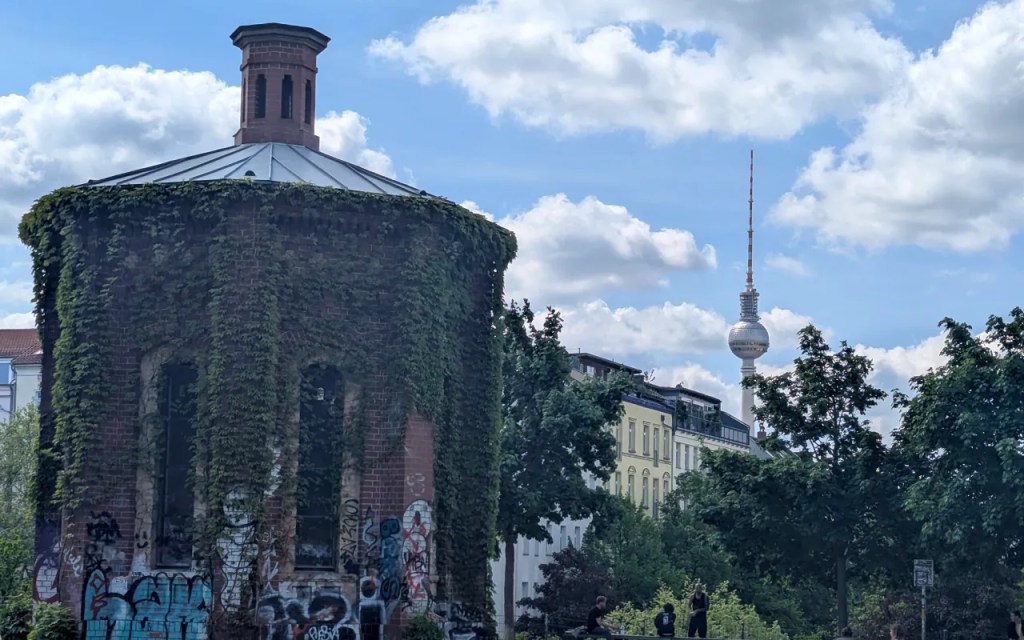
(Park am Wasserturm with view of TV Tower)
Last Updated July 25, 2025
When I first visited Germany, it was 1992 within 5 years of the fall of the Berlin Wall. I returned to Berlin several times in the 90’s but haven’t been back in a lifetime. (Well, my kids’ lifetime anyway.) This spring I spent almost a week in Berlin visiting my grown kids. I also caught up with two of my longtime German friends. It was delightful and it felt like I was in my 20’s again.
So much has changed in Berlin, yet many places still felt familiar. I revisited spots I loved years ago and explored new neighborhoods that didn’t even exist 25 years ago. This travel guide is for anyone who enjoys art, history, and trying foods from around the world.
If you’ve never been to a country where English isn’t the primary language, it can feel a bit intimidating at first. But Berlin is a great place to dip your toes into international travel—it’s very global and welcoming. Still, it helps to know a few key phrases like bitte (please), danke (thank you), and Sprechen Sie Englisch? (Do you speak English?). And if you plan to explore more of Germany, having a translation app on your phone can be a lifesaver.
Since this is a long article, feel free to use these quick links to jump to the sections you’re most interested in:
- Before you go
- Where to stay
- Getting around Berlin
- Top Sites in Alexanderplatz
- Museum Island
- Exploring more of Mitte
- Visiting the Berlin Wall, Jewish History and Memorials
- Dining in Prenzlauer Berg
- And there’s so much MORE…
Before you go
As you prepare to visit Berlin, these practical tips will help your trip go smoother.
Phone Service
Before leaving the U.S., check with your mobile carrier about international travel options—roaming charges can add up fast if you don’t have a plan in place. I use Verizon and opted into their TravelPass for $12/day. AT&T and T-Mobile offer similar options, and from what I’ve seen, T-Mobile’s plans are the most affordable. Tempting switch? Maybe. 😉
Credit Cards
Most restaurants and shops in Berlin’s Mitte neighborhood accept credit cards. In other areas, though, a few places still prefer cash. Just a heads-up: many credit cards charge foreign transaction fees. That’s one reason I hang onto my Capital One card—it doesn’t. Take a moment to check your card’s international fee policy before your trip. If you decide to switch cards to avoid fees, it’s best to do so well ahead of time. And if you find yourself in a cash-only spot, don’t worry—ATMs are usually close by. (That said, I avoided them—I’m just not a big fan of using ATMs not in a bank lobby.) If like me, you don’t like ATMs, see if your bank can order Euros for you before you go.
Purchase a Public Transportation Pass
Berlin’s public transportation is safe, easy to use, and much more affordable than taxis or rideshares. Before you arrive, consider getting either the Berlin WelcomeCard (which includes unlimited transportation plus discounts on attractions) or a simple multi-day travel pass.
I bought the WelcomeCard but didn’t end up using many of the extras. I probably should have used it at the Neue Museum on Museum Island—but oh well! The price difference between the WelcomeCard and a standard 6-day pass wasn’t huge, but I’d recommend looking into which attractions you want to visit first so you can make the most of it.
For my trip, I used the BVG app (available on Apple or Google Play) to purchase a multi-day pass. Since I was traveling light and wanted to take the train from the airport to my Airbnb, I needed a ticket that covered all fare zones. Berlin’s airport is in Zone C, and I was staying in Zone A.
Here are some helpful links to plan your transportation:
Where to Stay
I stayed in a lovely Airbnb in Prenzlauer Berg. It’s a great spot for up to two people who don’t mind sharing a bed—and don’t mind climbing into a tub for a shower.
My German friends stayed at Hotel Motel One Berlin-Hackescher Markt, which is right in the middle of everything and super close to Alexanderplatz.
Getting around Berlin
As I mention in the Before you go section, using public transportation is safe. It’s also easy once you get your bearings.
U-Bahn, S-Bahn and Trams
Berlin’s public transportation system is fantastic—and surprisingly easy to navigate once you get the hang of it. The U-Bahn is the underground subway, while the S-Bahn runs mostly above ground like a commuter train. Then there are the trams, which are modern streetcars that operate mostly in the eastern part of the city. Between all three, you can get just about anywhere you need to go.
Here’s something to know: there aren’t conductors checking tickets when you board, but that doesn’t mean tickets aren’t required. Random ticket checks do happen—especially if you look like a tourist—and the fines for riding without a valid ticket are steep. If you’re using the BVG app, you can just pull up your active ticket on your phone if asked. I was a little nervous about losing service, so each morning I’d screenshot my ticket while I still had Wi-Fi at my Airbnb—just in case.
One quirky thing: sometimes the train doors won’t open automatically if the car isn’t crowded. Just press the button on the door to enter or exit. On trams, there’s often a small button on the rail near the seats that you’ll need to push to signal the driver you want to get off at the next stop.
Use Google Maps
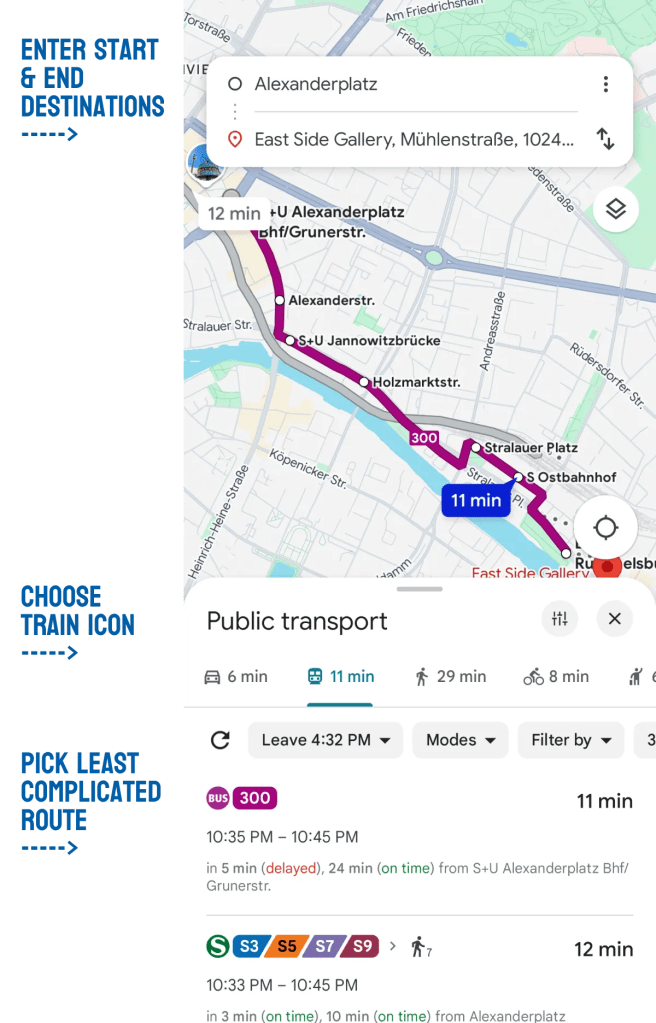
Google Maps (or Apple Maps) is a lifesaver when it comes to figuring out how to get around. Just tap the train icon instead of the car or walking icon, and you’ll see your transit options using U-Bahn, S-Bahn, or trams. I usually chose the route with the fewest transfers—as long as the wait wasn’t too long.
One of the best features? You’ll see live arrival times, so you’ll know exactly how long until your ride shows up. Once you’ve tried it a few times, it’ll feel second nature—and it’s so much easier (and cheaper!) than trying to walk everywhere or relying on taxis and Ubers.
Boat and Hop-On Hop-Off Bus Tours
In addition to trains and trams, Berlin offers a few scenic ways to get your bearings—especially if it’s your first visit. One of my favorite early-in-the-trip activities is a boat tour on the River Spree. There are plenty of options, and while you can buy tickets ahead of time, we bought ours on board the boat. That turned out to be a good call—we missed the boat we originally planned to take, and it would’ve been frustrating to have prepaid.
The boat we ended up on had table seating, and we could order drinks and snacks while cruising past Berlin’s landmarks. The tour commentary was only in German (understandably), but we later realized there were headphones available with an English version. So here’s a tip: ask the crew before the tour starts if you’ll need headphones in your language.
While I didn’t take one of the Hop-On Hop-Off bus tours, they’re another great option. I think they are a convenient way to get an overview of a city’s history and neighborhoods, especially on your first day.
Now that you have a better idea of how to get around Berlin – let’s explore the city!
Top Sites in Alexanderplatz
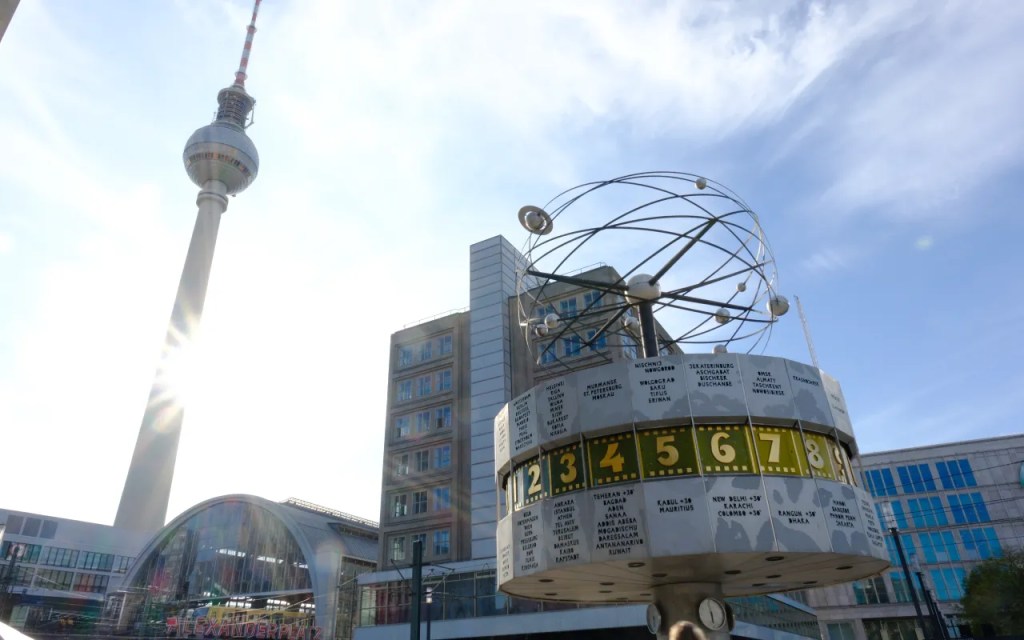
(TV Tower, Alexanderplatz Train Station and World Clock)
Located in the heart of Berlin, Alexanderplatz has long been a central hub of the city. It began as a cattle market in medieval times, flourished with nightlife in the 1920s, and was then heavily damaged during World War II. In the late 1960s, the area—then part of East Berlin—was rebuilt and expanded by the German Democratic Republic (GDR). During that time, the square was made pedestrian-only, the TV Tower and World Time Clock were added, and the Neptune Fountain was relocated here.
Alexanderplatz also played a major role in modern history. On November 4, 1989, just five days before the fall of the Berlin Wall, half a million people gathered here to protest against the GDR government.
Today, Alexanderplatz is a natural meeting point and a great place to kick off your Berlin adventure. Whether you’re here to shop, grab a bite, or see the sights, there’s plenty to explore—all within a short walk. Here are three highlights you shouldn’t miss:
TV Tower (Fernsehturm)
At 1,207 feet tall (including the antenna), the TV Tower is the tallest structure in Germany. The enclosed observation deck offers panoramic views of Berlin, with signs that help you identify landmarks and neighborhoods below.
I highly recommend buying your tickets in advance through the official website. You’ll select your date and time, and you can arrive up to 15 minutes early. We spent about an hour enjoying the view—it’s especially beautiful at sunset if you can time it right.
You can enjoy drinks and light snacks on the general admission area of the TV tower, OR you can purchase tickets to the recently renovated rotating restaurant. Click here to explore the options. You can purchase a general ticket and then order food off the menu, or you can pre-select either a breakfast, vegan meal or 4-course meal in advance. The chef Tim Raue is known for his interpretation of Berlin, Brandenburg and German food. Sadly the restaurant was closed when I visited, but I’ll be sure to try it next time.

(View of Museum Island from TV Tower 1992 & 2025)
World Time Clock (Weltzeituhr)
Installed in 1969 to celebrate the GDR’s 20th anniversary, the World Time Clock is one of Berlin’s iconic meeting points. Designed by Professor Erich John and built in just a few months with the help of 124 volunteers, the clock shows the current time in 146 cities around the world with a rotating dial at its center.
More than just a functional timepiece, it was intended to symbolize East Berlin’s connection to the wider world during a period of isolation. Today, it’s still a popular gathering spot and makes a great photo op with its unique retro-futuristic design.
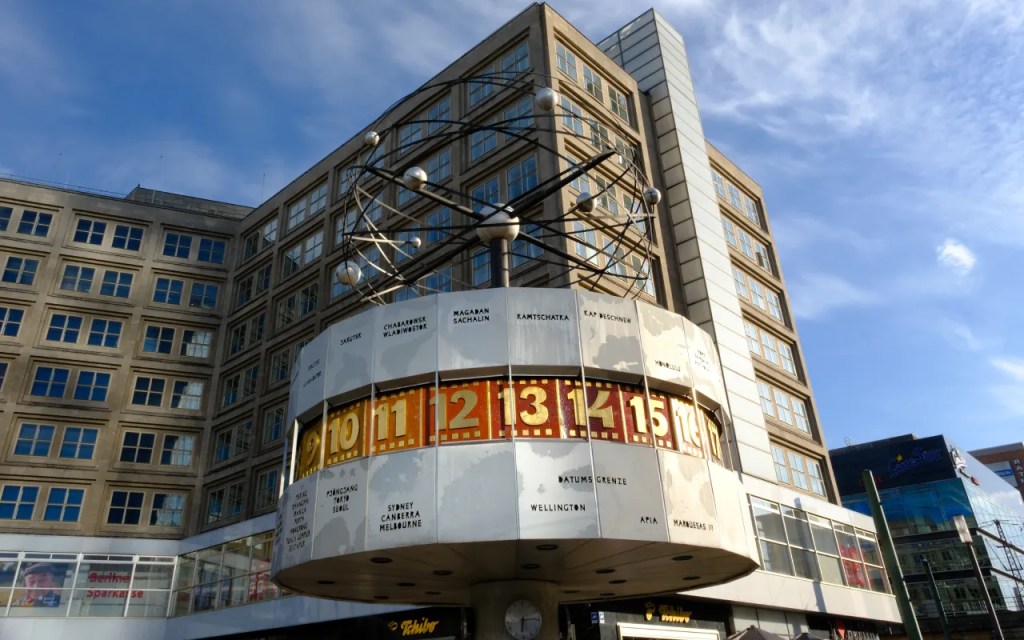
(World Time Clock in Alexanderplatz)
Neptune Fountain (Neptunbrunnen)
This ornate bronze fountain was created in 1891 by Berlin sculptor Reinhold Begas. Originally located at Schlossplatz, it was moved to Alexanderplatz in 1969.
At its center is Neptune, the Roman god of the sea, surrounded by four female figures representing the major rivers of Prussia at the time:
- Elbe, holding fruit and corn
- Rhine, with a fishnet and grapes
- Vistula, carrying timber
- Oder, with goats and animal hides
It’s a charming and artistic stop—perfect for a quick rest or a few photos before continuing your adventure through the city.

(Neptune Fountain)
Museum Island
Museum Island is one of Berlin’s most visited and visually stunning sites. Nestled between the River Spree and the Spreekanal, this UNESCO World Heritage Site is a lovely place to stroll—whether you’re museum-hopping or simply admiring the architecture. It’s home to five world-class museums, built between 1824 and 1930 by prominent Prussian architects, as well as the grand Berlin Cathedral.
Each museum offers a window into different cultures and eras, so you can choose based on your interests—or see them all if you have the time!
James-Simon-Galerie
The James-Simon-Galerie serves as the visitor center for Museum Island. It’s the perfect place to start your day—you can buy museum tickets, check out current exhibits, or join a talk or lecture. The current temporary exhibition (through November 2, 2025) features beautifully preserved tapestries from Cairo.
Altes Museum
If ancient history is your thing, don’t miss the Altes Museum. This museum houses treasures from ancient Greece, Rome, and Etruria—including portraits of Julius Caesar and Cleopatra, statues of Aphrodite, and artifacts that bring the classical world to life.
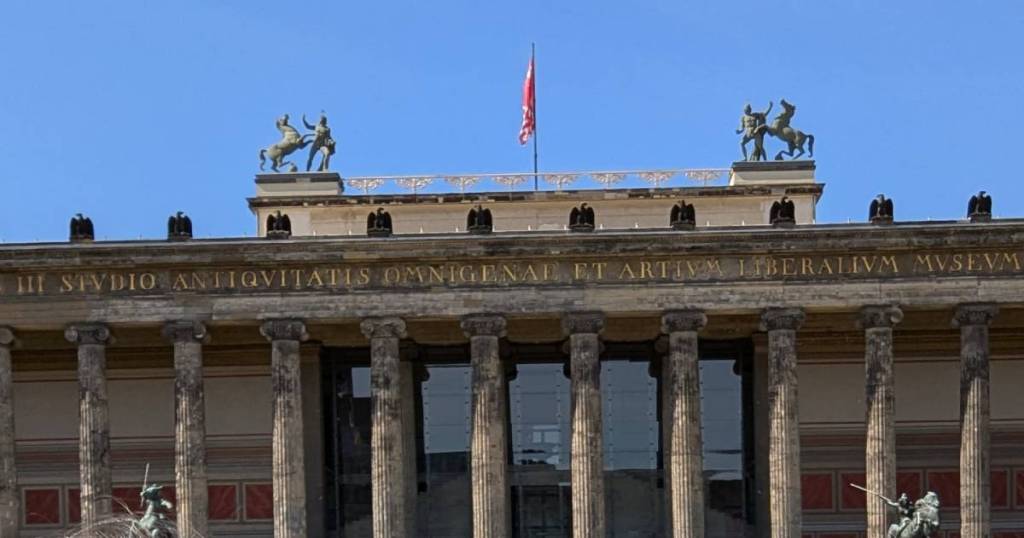
(Exterior front of the Altes Museum)
Neues Museum
The Neues Museum is home to one of Berlin’s most iconic pieces: the bust of Queen Nefertiti. The collection focuses on Egyptian and Nubian art, along with archaeological finds from Europe and Asia that span from the Stone Age to the Middle Ages.
The building itself is also part of the experience. Severely damaged in World War II, it was beautifully restored in 2003 by David Chipperfield Architects, blending original details with modern elements.
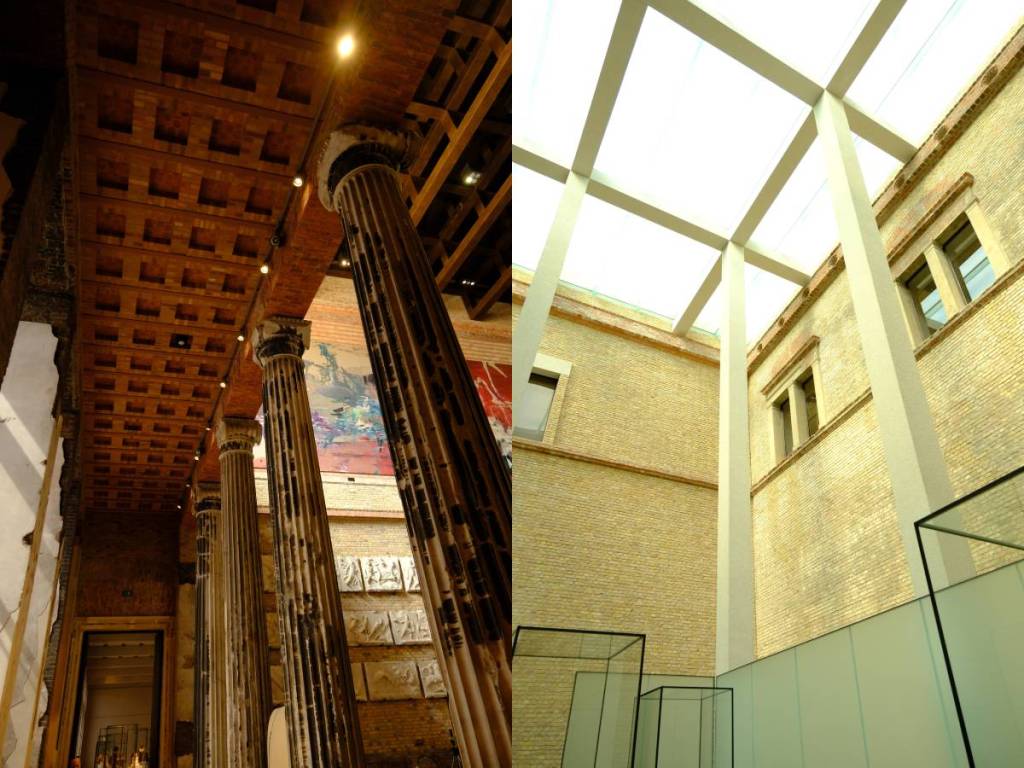
(Interior views of the Neue Museum)
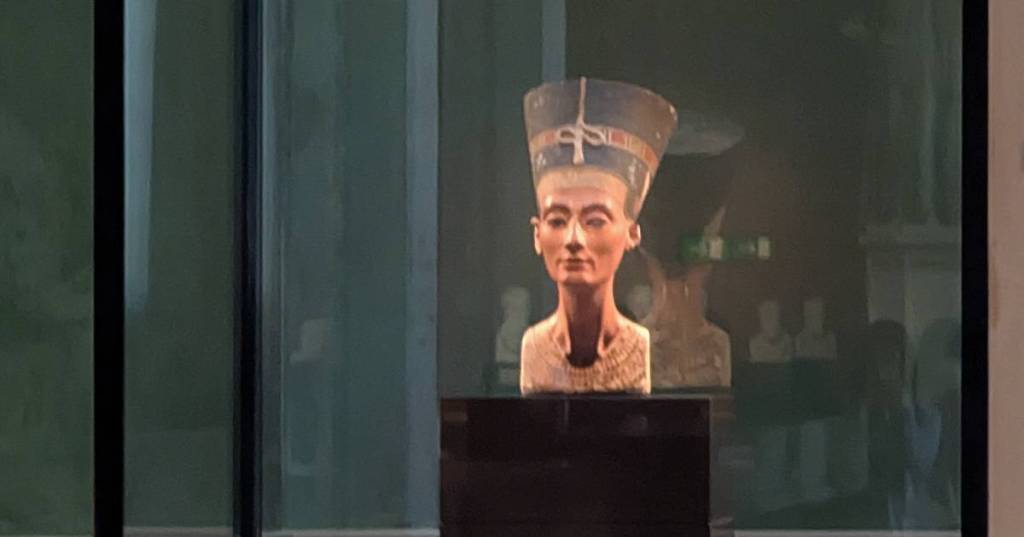
(Bust of Nefertiti)
Alte Nationalgalerie
Art lovers will want to spend time in the Alte Nationalgalerie, especially if you’re drawn to Romanticism and Impressionism. This museum was the first in the world to acquire an Impressionist painting and now holds an impressive collection of 19th-century works, including pieces by Monet, Caspar David Friedrich, and more.
Bode-Museum
Located at the northern tip of Museum Island, the Bode-Museum is known for its elegant dome and two standout collections: Byzantine and late antique art, and one of the largest numismatic collections in the world. Highlights include works by Andrea Mantegna, Florentine sculpture, and over 500,000 coins and minting objects.
Pergamonmuseum
While the main Pergamonmuseum is currently closed for renovations, Pergamonmuseum. Das Panorama remains open. This immersive 360-degree installation by artist Yadegar Asisi lets you step into the ancient city of Pergamon, complete with digital reconstructions and vivid storytelling.
Berlin Cathedral (Berliner Dom)
Built between 1894 and 1905, the Berlin Cathedral is the largest Protestant church in Germany—and the second largest in the world. Its massive Neo-Renaissance dome is a landmark visible from all around Museum Island.
Badly damaged during WWII, the interior has since been beautifully restored. I visited shortly after it reopened in 1995, and it’s still one of the most memorable cathedrals I’ve seen—right up there with Notre Dame.
The cathedral is usually open daily from 9 a.m. to 6 p.m. (last admission at 5 p.m.), and I recommend buying tickets online to skip the often-long lines. Protestant services are held Sundays and public holidays at 10 a.m.
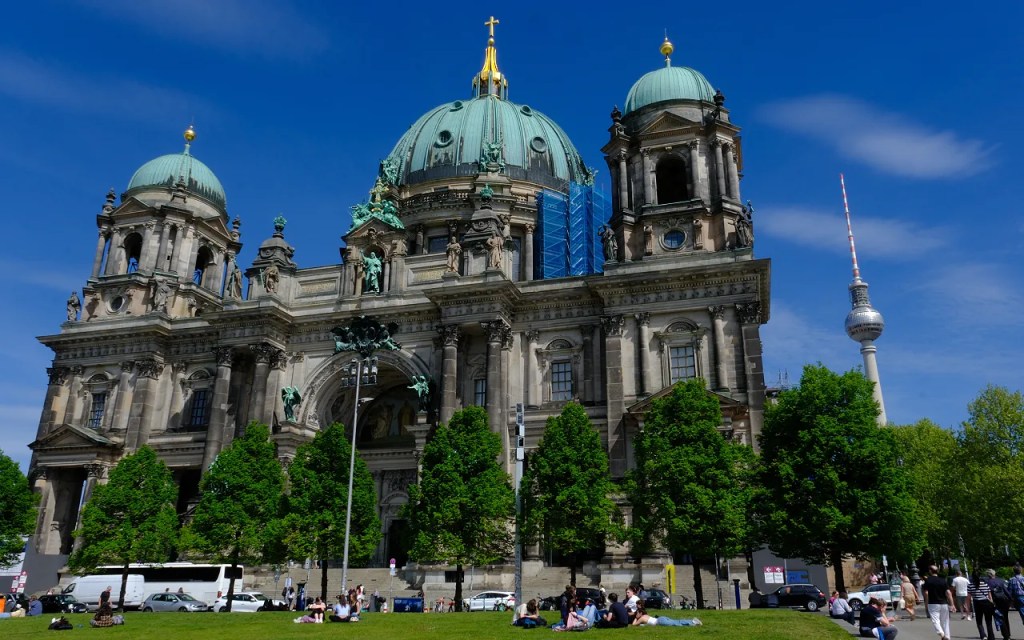
(Front of Berliner Dom – Berlin Cathedral)
Exploring more of Mitte
Mitte is a large neighborhood and the heart of Berlin. Both Alexanderplatz and Museum Island are in Mitte, but here are other must see places:
Neue Wache
Originally built as a memorial for those who died in the Napoleonic Wars and the Wars of Liberation, the Neue Wache also served as a royal guardhouse for King Frederick William III of Prussia. It’s a striking example of Prussian neoclassical architecture, designed by Karl Friedrich Schinkel—who also designed the Altes Museum and Berlin Cathedral.
Today, the building continues to be a memorial site. Inside, you’ll find Mother with Her Dead Son, a powerful sculpture by Käthe Kollwitz (1867–1945), known for her emotionally raw works that highlight the suffering of war, poverty, and working class injustice. It’s a simple but incredibly moving space.
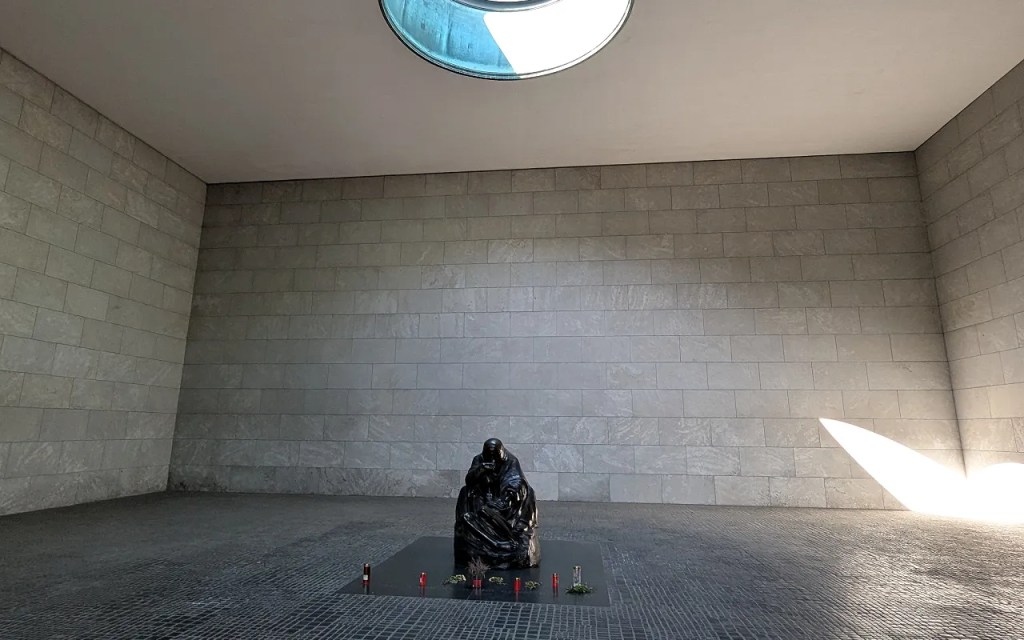
(Interior of Neue Wache – featuring Mother with Her Dead Son sculpture)
Brandenburg Gate
No trip to Berlin is complete without a visit to the Brandenburg Gate. Located on Pariser Platz at the western edge of Tiergarten, this neoclassical structure once served as a city gate and is now one of Berlin’s most iconic landmarks.
Designed by Carl Gotthard Langhans in the late 18th century, the gate is crowned with the Quadriga—a sculpture of a four-horse chariot driven by the goddess of peace, created in 1793 by Johann Gottfried Schadow. Both the gate and the sculpture were badly damaged during World War II, and the Quadriga had to be fully replaced in 1956.
During the Cold War, the Gate stood in a no-man’s land between East and West Berlin, inaccessible to both sides. It reopened on December 22, 1989, just weeks after the Berlin Wall fell, and became a symbol of reunification.
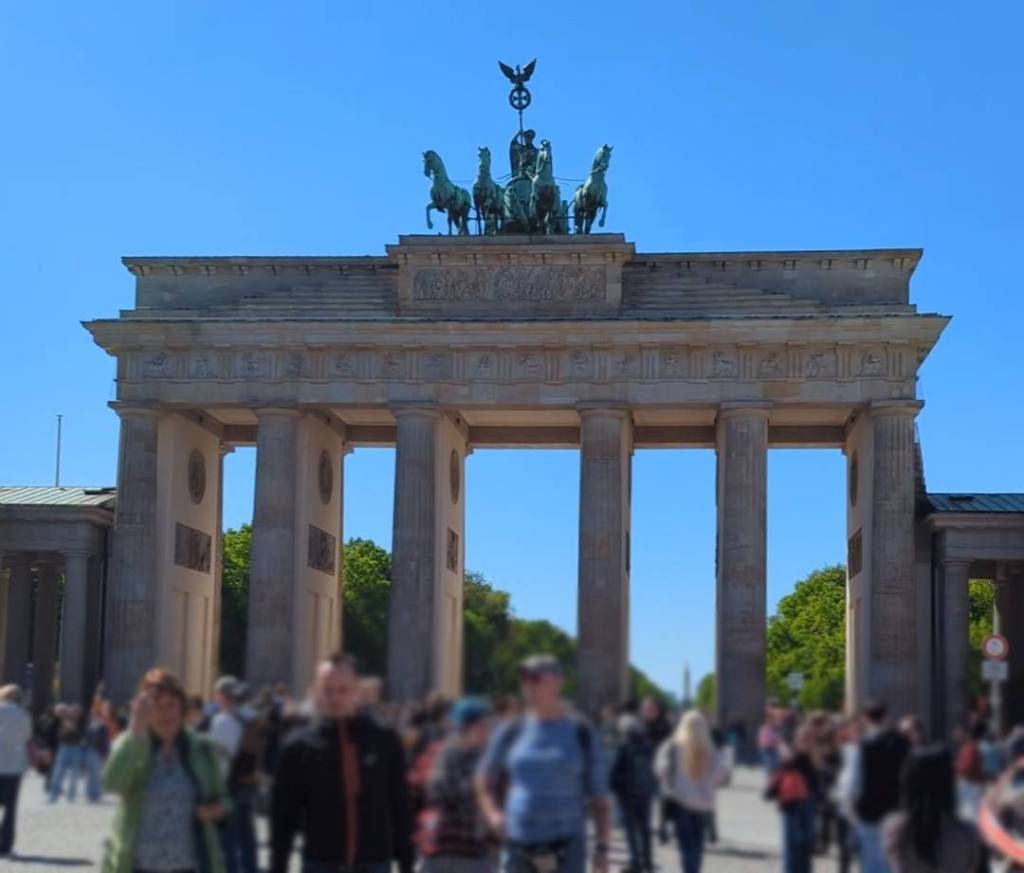
(Brandenburg Gate, Pariser Platz)
Haus Schwarzenberg
Tucked behind a street of shops and cafés, Haus Schwarzenberg is easy to miss—but definitely worth a detour. This graffiti-covered courtyard in Mitte is a hub for independent art, culture, and history. You’ll find small galleries, sculptures, and creative shops run by local artists.
The courtyard also holds powerful history. The building was once a 1940s factory, and it’s here that Otto Weidt helped protect his Jewish workers from Nazi persecution. The museum on-site tells his story in a moving and personal way.
Grab a coffee or sit at one of the courtyard tables to soak up the creative energy—and maybe pick up something unique from a local maker.

(Haus Schwarzenberg)
Memorial to the May 10, 1933 Nazi Book Burning
Across from Humboldt University in Bebelplatz, you may notice people milling about and looking down. There is a glass square set into the ground, and you’ll see empty white bookshelves beneath your feet. This installation by Israeli artist Micha Ullman marks the site of the May 10, 1933 Nazi book burning.
University students plundered private bookshelves, public libraries and academic collections to find books blacklisted by librarian Wolfgang Herrmann. They brought them to Bebelplatz and burned 20,000 “un-German” books. The books included works by Sigmund Freud, Karl Marx, Rosa Luxemburg, Heinrich Mann, and many others—some of whom were already in exile. The shelves are empty but large enough to hold the same number of books that were destroyed.
Next to the memorial, a bronze plaque bears a chilling quote from German poet Heinrich Heine, written in 1820:
“That was but a prelude;
where they burn books,
they will ultimately burn people as well.”
David Hasselhoff Museum
Berlin has a lot of heavy history—but if you’re in the mood to lighten things up, stop by the delightfully quirky David Hasselhoff Museum, located in the basement of the Circus Hostel on Rosenthaler Straße.
It’s tiny and full of ’80s and ’90s nostalgia—especially fun if you were a fan of Knight Rider or Baywatch. And yes, there’s a mural of “The Hoff” that I couldn’t resist having my phone taken with.

(Me with David at the David Hasselhoff Museum 😂)
Cafés in Mitte, Berlin
If you follow me on social media, you know I have a deep love for lattes—and for finding great cafés wherever I travel. There’s just something extra special about starting the day with a warm drink and something delicious in a new city. Since we spent most of our time in Mitte, I had the chance to try a few cozy spots worth sharing:
Father Carpenter
Tucked inside a quiet courtyard, Father Carpenter is a popular weekend brunch spot—and even on a busy Sunday, we didn’t have to wait long for a table. The café has a great selection of specialty drinks and yummy brunch options. I ordered the Turkish Eggs (Çılbır), and it was savory, satisfying, and a nice change from my usual breakfast.
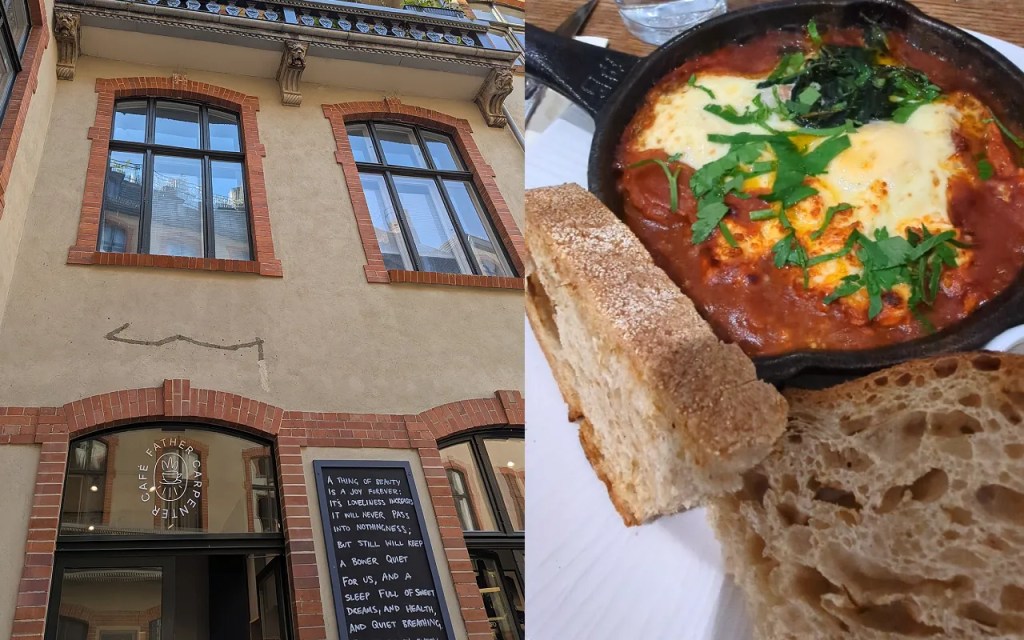
(Exterior of Father Carpenter Cafe and Çılbır Breakfast Dish)
What do you fancy Love?
With a quirky name and a vibrant interior, this café is known for its cakes and pastries—but the breakfast menu is equally impressive. I went for the vegan porridge, which came topped with bananas, coconut, and berries, and paired it with a hot macchiato.
Sammy’s Berliner Donuts
I’ll admit—I’m not usually a fan of donuts. But Sammy’s changed my mind. These extra-large donuts come in all kinds of creative flavors. I went with the Caramel Biscoff, and it was soft and genuinely delicious. Perfect if you’re craving a fun treat.

(Sammy’s Berliner Donuts display case and the donuts we chose Vanilla Crumble and Caramel Biscoff)
Remembering Berlin’s Divided Past: The Wall, Jewish History & Memorials
Berlin wears its history on its sleeve—especially when it comes to the Cold War and the Holocaust. Across the city, you’ll find deeply moving and thoughtfully curated memorials that invite you to reflect, remember, and better understand Berlin’s complicated past. Some of these sites are quiet and solemn. Others are powerful in their scale. All of them left a lasting impression on me.
The Berlin Wall & Cold War History
Checkpoint Charlie
One of the most famous former border crossings between East and West Berlin, Checkpoint Charlie was originally controlled by Americans. When I first visited in 1992, the real checkpoint station was still there. It has been removed, and replaced with a symbolic marker. I was disappointed the marker isn’t in the same place the station once stood, but it’s changed so much there, maybe that doesn’t matter. Thankfully they left the original signage. The area itself is now very western and touristy. You’ll see how much different it is in the photos below. There’s also a privately-owned museum nearby, which I visited years ago—but skipped this time. Entry is about $20 for an adult ticket.

(Checkpoint Charlie in 1992 and again in 2025)
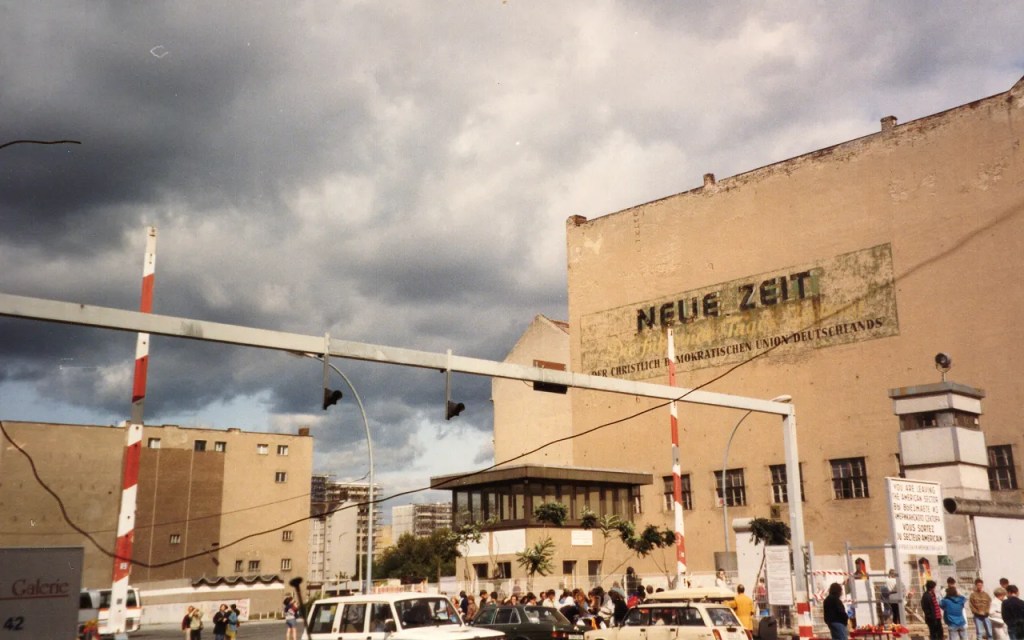
(Full view of Checkpoint Charlie in 1992)
East Side Gallery
The East Side Gallery is a free open-air art gallery almost a mile long on the banks of the Spree River in Friedrichshain. It is the longest continuous section of the Berlin Wall still standing. The Western side of the wall has places where the original graffiti is still in place. The Eastern side of the wall features artwork from artists across the globe.
The artwork is beautiful and profound, and there are places along the river you can sit and enjoy the day. There are also historical markers in several places along the way to learn more about the exhibit and the wall itself. It’s a perfect walk on a sunny, fair day.
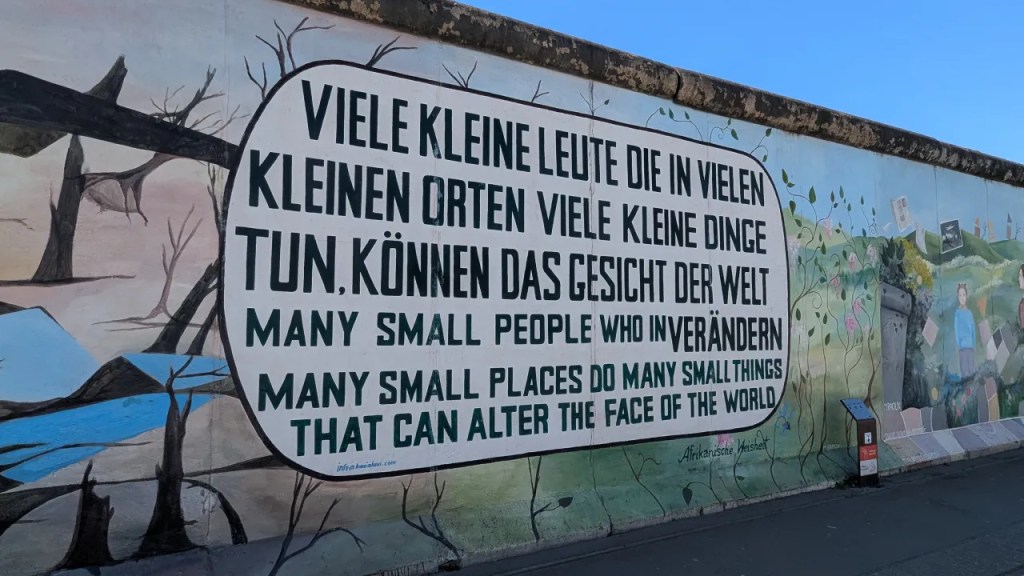
(One Artist’s Panel on the East side of the Berlin Wall)

(Original graffiti on west side of the Berlin wall)
Weiße Kreuze (White Crosses Memorials)
There are two poignant memorials to those who died trying to cross the Berlin Wall. One is the official memorial on the bank of the River Spree near the Reichstag. The other is unofficial, just steps from the Brandenburg Gate, where a small fence holds 14 white crosses. Both are simple, quiet, and incredibly moving.
Schwedter Straße – Where the Wall Fell
On this trip, I visited the area near Schwedter Straße, where the Berlin Wall was accidentally opened on November 9, 1989. Walking along this stretch, you’ll find markers and panels that tell the stories of escapes—some successful, some tragic—and how the wall divided neighborhoods and lives.
Did you know that West German guards couldn’t assist East Berliners unless they physically made it over the wall? Still, many guards did what they could—often distracting East German officers when someone tried to escape.

(Schwedter Straße – where the wall fell and the path along where the wall stood.)
Topography of Terror
Built on the site of the former Gestapo headquarters, the Topography of Terror museum traces the rise of Nazi power and the terrifying reach of the SS and secret police. Part indoor museum, part outdoor exhibit, it uses photographs, documents, and personal accounts to trace how state terror was organized and carried out.
We spent about 45 minutes at the open-air portion, which is free and thoughtfully designed. Along one edge of the site is one of the longest surviving sections of the Berlin Wall.
Tränenpalast (“Palace of Tears”)
Located at Friedrichstraße Station, this glass pavilion was once was a border check point between East and West Berlin between 1962 and 1989. You would have had your passport and visa checked, as well as your luggage inspected. Today it houses a free museum that brings those emotional moments to life with interviews, restored rooms, and suitcases full of personal items travelers once carried.
I visited the Palace of Tears with my German friends, and it spurred conversation of their memories of when the wall fell and where they both were. (One was East German and the other West. They would have never met, fallen in love and married if the wall still stood.)
Holocaust Memorials & Jewish History
Memorial to the Murdered Jews of Europe
Just a short walk from Brandenburg Gate, this vast memorial consists of 2,710 concrete pillars arranged in a grid over a city block. As you walk deeper into the memorial, the ground dips and the pillars grow taller, gradually surrounding you. At times you’ll see others walking nearby; at other moments, you feel completely alone—an intentional and haunting design.
There’s also a free underground information center with historical context and personal stories, and guided tours are available if you want to dive deeper.
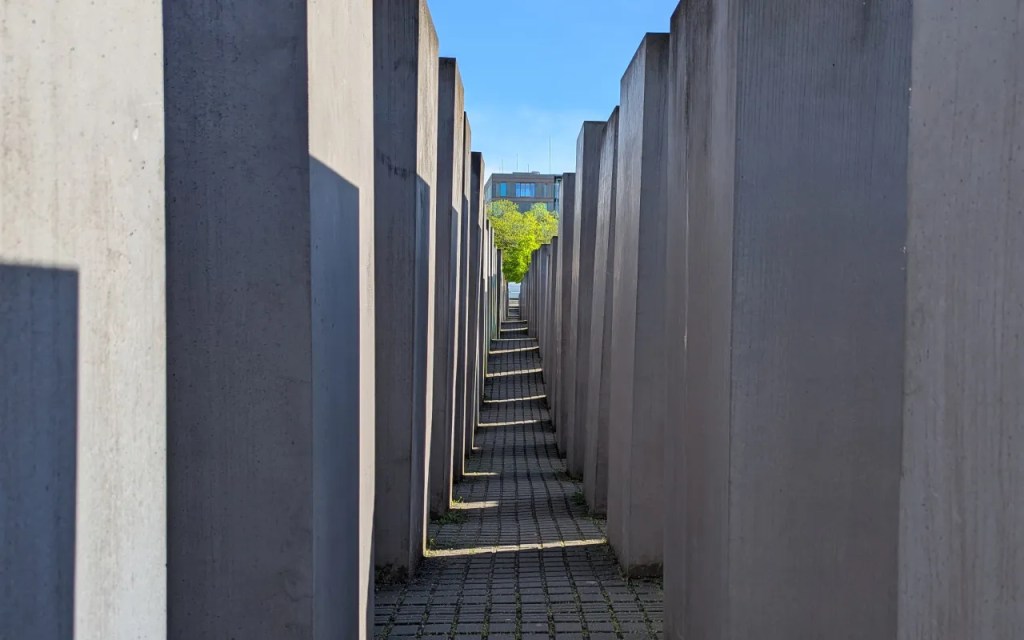
(Walking through the Memorial to the Murdered Jews of Europe)
Jüdischer Friedhof (Jewish Cemetery – Prenzlauer Berg)
This quiet cemetery in Prenzlauer Berg dates back to the early 1800s and holds the graves of many prominent Jewish families. There’s also a small memorial for victims of the Nazi regime. It’s peaceful, reflective, and a place where you can slow down and process everything you’ve seen.
I walked over from my Airbnb and was surprised by how few other visitors were there—it gave me space to read the names and dates and reflect.

(Jüdischer Friedhof – Prenzlauer Berg)
These sites aren’t easy to visit—but they are essential. Whether you’re interested in Cold War history, the Holocaust, or simply want to understand how Berlin became the city it is today, this section of your trip will stay with you long after you leave.
Dining in Prenzlauer Berg
Since my Airbnb—and my kids apartments—were in Prenzlauer Berg, we began and ended most of our days exploring the neighborhood’s many cozy cafés and international restaurants. Berlin is a wonderfully diverse and global city, and while you’ll find great German food here, we opted to try flavors from around the world.
Cafés & Breakfast Spots
Atlas Café
Ever had pumpkin quiche? Neither had I—but it was delicious. Atlas Cafe serves generous, American-sized portions, and the vibe is casual and welcoming. A great spot to start the day or fuel up between outings.
Kaffee KÄTHE
Do you love breakfast for lunch? Yep, me too. Especially when I’ve been traveling overnight. Kaffee KÄTHE has a relaxed charm, great coffee, and a menu that works well whether you’re craving sweet or savory.
Café Gentil
By mid-trip, I was (gasp!) taking a little break from lattes. Café Gentil was the perfect spot to hang out for a few hours with a kombucha and a flaky French pastry. I brought my sketchbook and sat outside—it was a lovely way to slow down and recharge.

(Atlas Cafe – Pumpkin Quiche and Latte)
Dinner Recommendations
Der blaue Fuchs
This cozy, elegant spot offers Georgian-inspired cuisine. I had the salmon with a blackberry sauce and was surprised by how beautifully the flavors worked together. Warm ambiance and kind service made it extra memorable.
Masel Topf
An Israeli restaurant with a spacious outdoor dining area. We ordered the full spread of appetizers and shared our main dishes, which let us try a wide variety of flavors. I definitely recommend going with a group if you can—it’s a feast-style experience and worth every bite.
KOI 56
This Vietnamese restaurant has a large menu and comfortable indoor seating. While they do offer outdoor tables, it was a chilly evening during our visit, so we headed inside and enjoyed warm, flavorful noodle dishes.
Umami
Another great Vietnamese option nearby with ample outdoor seating and a cozy, modern atmosphere. Perfect for a casual but flavorful dinner out.
Vegang Prenzlauer Berg
In the mood for vegan with flair? This spot served up plant-based dishes bursting with flavor, and their cocktail menu didn’t disappoint. Great for a fun night out that doesn’t feel too heavy.

(Dinner in Prenzlauer Berg – Soup and Cocktail at Vegang and dessert at Umami)
And there’s so much MORE…
Even though I’ve been to Berlin several times, I still haven’t seen everything I’d like to. On this most recent visit, I revisited a few familiar places—but also explored new ones that didn’t even exist during my early trips.
If you’re planning your own visit, here are a few more spots you may want to add to your “must-see” list:
- Berlin Zoological Garden – I visited back in the ’90s, but haven’t been back since. It’s one of the oldest and most well-regarded zoos in the world—and great if you’re traveling with kids or just love animals.
- Tiergarten – This massive green space is ideal for long walks, people-watching, spotting sculptures, or relaxing by the lake with a picnic. If you like Central Park in New York, I recommend taking a stroll through here.
- Kreuzberg – South of Mitte, this eclectic neighborhood is full of artists, students, and immigrants. Expect colorful street art, a lively nightlife, and an endless supply of cool cafés and vintage shops.
- Tempelhofer Feld – A former airport turned public park, where you can walk, bike, or even rollerblade down the old runways. Fun fact – this is airport I used to fly into in the 90s.
- Charlottenburg Palace – If you’re in the mood for something a bit more regal, this 17th-century baroque palace and its gardens are absolutely worth a visit.
- Markthalle Neun – A trendy indoor food market in Kreuzberg featuring local vendors and international bites. Great for lunch, snacks, or just browsing.
Berlin is the kind of city that keeps surprising you—and pulling you back. I already have a list started for my next trip.
Thanks for Traveling to Berlin with Me
Thanks so much for reading along! While I usually share stories from the Hudson Valley of New York and Florida’s Space Coast, it was a joy to take you a little farther from home with this Berlin guide. I hope it inspires your own adventures—whether across the ocean or right in your own backyard.
If you’ve been to Berlin and have favorite spots I missed, I’d love to hear about them. And if you’re planning a trip, feel free to DM me on Instagram with questions!
✨ P.S. I send out a travel newsletter every Thursday with highlights from our latest adventures—both near and far. If you’d like to follow along, you can sign up here. ✨
